
 English
 Français
 Español
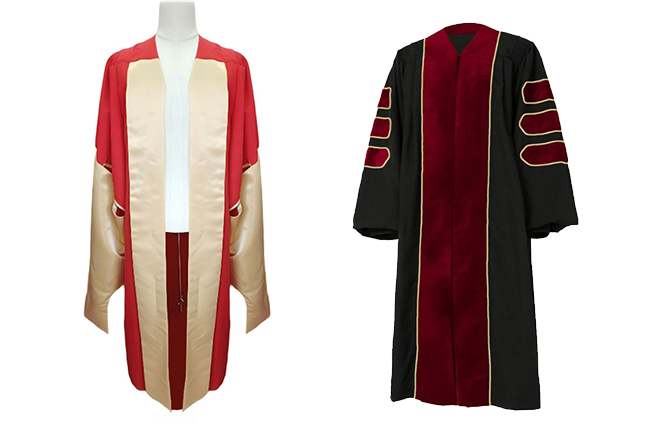
Graduation regalia is more than just ceremony attire—it’s a reflection of cultural traditions and academic heritage. While British and American graduation gowns and caps share medieval European roots (originally worn by scholars to stay warm in unheated universities), they’ve evolved into distinct styles with unique designs and meanings. Here’s a concise breakdown of their key differences:
Historical Foundations
- British Academic Dress: Deeply tied to Oxford and Cambridge’s 800-year traditions, with strict rules shaped by early clerical attire decrees . It prioritizes continuity, with most universities adhering to "one degree, one gown" principles .
- American Regalia: Standardized in the 20th century via the American Council on Education (ACE) guidelines . It blends European traditions with accessibility, allowing institutional customizations while maintaining uniformity.
Core Design Differences
Gowns
- British:
- Bachelor’s: Black, lightweight fabric with long, pointed "wing-like" sleeves .
- Master’s: Closed sleeves with subtle fabric upgrades for advanced study.
- Doctoral: Traditionally black or scarlet (Oxford/Cambridge) with luxurious fabrics and minimal ornamentation .
- American:
- Bachelor’s: Loose-fitting black gown with straight, open sleeves .
- Master’s: Oblong sleeves with an elbow slit for movement .
- Doctoral: Bell-shaped sleeves with three velvet stripes (symbolizing academic excellence) and optional school-color accents .
Hoods (Symbol of Academic Identity)
- British: Draped capes with strict color coding—lining and edging indicate both university and discipline (e.g., saffron for science, maroon for engineering) . Length and fabric (silk for higher degrees) denote rank.
- American: Structured, rectangular hoods with standardized lengths (3ft for bachelor’s, 4ft for doctoral) . Black velvet outer layer, with lining in the university’s official colors and velvet edging for academic field .
Caps & Tassels
- British:
- Undergraduates/masters: Classic mortarboard with discipline-specific tassel colors .
- Doctoral: Tudor bonnet (rounded, stiff cap with twisted cord) .
- American:
- Bachelor’s/masters: Universal mortarboard, usually with a black tassel (schools may allow major-specific colors).
- Doctoral: Soft, eight-sided velvet tam with metallic tassels .
- Unique tradition: Tassels move from right to left after degree conferral .
Cultural Significance
- British: Emphasizes collegiality and academic hierarchy—wearing regalia connects graduates to centuries of scholars .
- American: Highlights individual achievement and institutional pride, with rituals like tassel-turning symbolizing personal growth .
Practical Tips
- British Ceremonies: Check your university’s specific dress code (Oxford/Cambridge have detailed regulations) and use approved suppliers .
- American Ceremonies: Follow ACE guidelines—renting is common for bachelor’s/master’s, while doctoral candidates often invest in custom regalia . Don’t forget the tassel tradition!
Final Takeaway
British regalia honors centuries of unbroken tradition with precise rules and symbolic details, while American attire balances standardization with individuality. Both serve the same purpose: to mark academic achievement and connect graduates to a global community of scholars. Whether you’re donning a pointed-sleeve British gown or a striped American doctoral robe, it’s a wearable symbol of hard work and shared academic heritage.


